AEO vs GEO vs SEO: what's the difference, and is SEO dead in 2026?
AEO vs GEO vs SEO is less of a contest than it sounds: all three are about being found when someone searches, whether in a list of links or in an AI answer. Here is what each term means, where GEO came from, what Google and Microsoft actually say about AI search, and a straight answer to whether SEO is dead.
The short answer
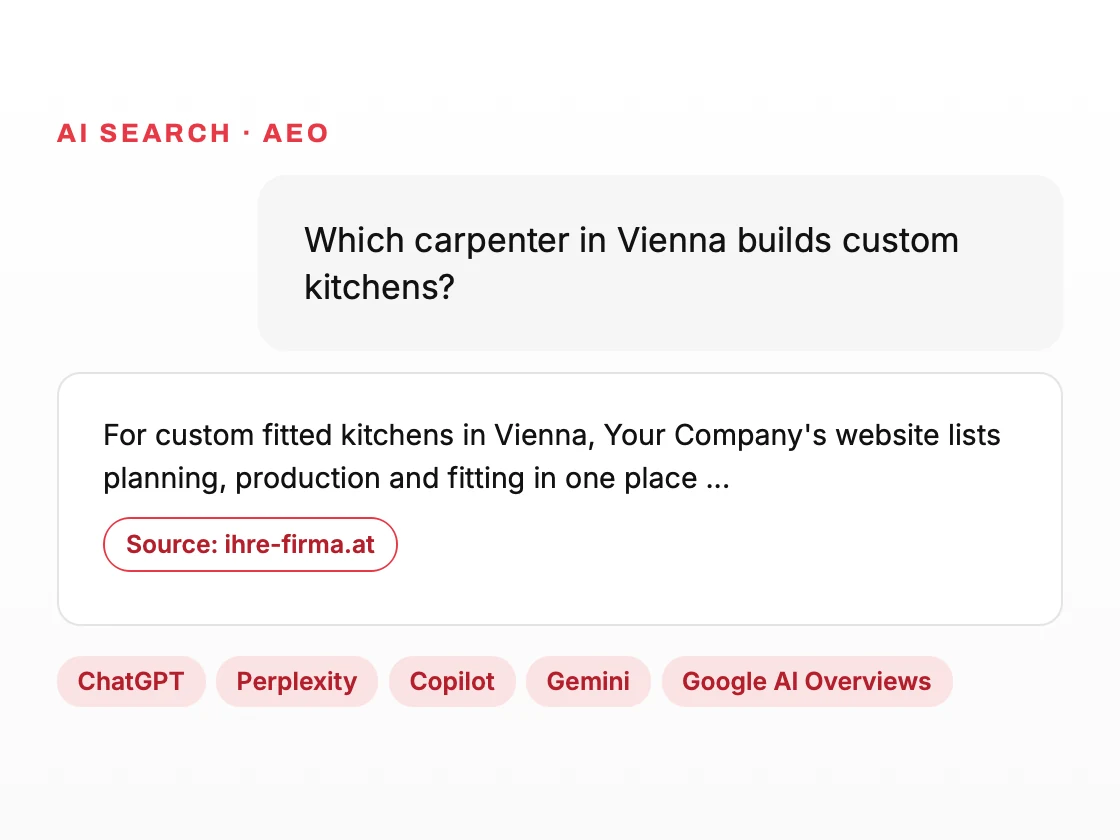
SEO is not dead, and AEO and GEO don't replace it. SEO (search engine optimization) is about ranking in Google and Bing results. AEO (answer engine optimization) and GEO (generative engine optimization) are about getting AI tools like ChatGPT, Copilot and Google's AI Overviews to pick your site as a source. The two newer terms are near-synonyms, and both build on SEO.
- Google's own position: AI Overviews and AI Mode need no special optimization, and SEO best practices still apply.
- Traffic from those AI features shows up in Google Search Console under the "Web" search type.
- Bing Webmaster Tools now reports how often Copilot cites your pages.
- GEO as a term goes back to a research paper submitted in November 2023.
- The goal is the difference: SEO wants rankings, AEO and GEO want citations in AI answers.
Plan SEO and AI visibility together
What is AEO and GEO in digital marketing?
The acronyms get mixed up a lot, and you will also see AIO, LLMO and "AI SEO". Here is how they line up:
| Term | Full form | Goal |
|---|---|---|
| SEO | Search engine optimization | Rank well in search results |
| AEO | Answer engine optimization | Become the source of an answer |
| GEO | Generative engine optimization | Show up in generative AI answers |
| AIO, LLMO, AI SEO | Umbrella terms | Same goal as GEO |
In practice, an "AEO agency" and a "GEO agency" usually sell the same work.
Is SEO dead because of AI?
No. Google says the best practices for SEO remain relevant for AI Overviews and AI Mode. Here is how the common claims hold up against what the platforms have published:
AI search makes SEO pointless
Google: SEO best practices remain relevant for AI features in Search
You need new technical files for AI
Google: no new machine-readable files, AI text files or special schema needed
You can't measure AI traffic
Google counts AI Overviews and AI Mode in Search Console; Bing reports Copilot citations
Only clicks matter
Google says clicks from results pages with AI Overviews are "higher quality" and suggests tracking conversions too
What does change, according to Google: people ask longer, more specific questions, plus follow-ups. Pages that answer such questions directly fit that pattern better than a page titled "Our services".
Sources: Google Search Central, "AI features and your website" and blog post "Top ways to ensure your content performs well in Google's AI experiences on Search" (May 2025); Microsoft Bing Blog on AI Performance (February 10, 2026). Checked on November 22, 2026.
Generative engine optimization: what it means and where it comes from
Generative engine optimization was introduced in a paper by Pranjal Aggarwal and co-authors, submitted to arXiv in November 2023. It calls AI search systems that summarize several sources "generative engines" and proposes GEO as a way for content creators to improve their visibility in those answers.
That 40% figure comes from the authors' own benchmark, GEO-bench, not from real businesses. It shows that content choices can affect whether a page gets cited, not how much any one site will gain.
Source: Aggarwal et al., "GEO: Generative Engine Optimization", arXiv:2311.09735 (submitted November 16, 2023, last revised June 28, 2024). Checked on November 22, 2026.
AEO vs SEO in 2026: what stays and what's new
Stays the same
Crawlable pages, content in text, internal links, a good page experience, structured data that matches the visible text.
Gets more weight
The customer's question as the heading, the answer first, tables and FAQs. Microsoft says clear headings, tables and FAQ sections make content easier for AI systems to reference.
Measured differently
Besides rankings: Copilot citations, visits from AI tools and fixed test questions in ChatGPT, Gemini and Perplexity.
- SEO basicsCrawlable, fast, text in the HTML.
- Answer pagesQuestion as heading, answer first.
- ConfirmationSame facts on profiles and directories.
- MeasureMonthly, with the same questions.
For the hands-on version, read how to get your business recommended by ChatGPT, including a ten-minute self-check.
For what Google itself requires, see how to appear in Google AI Overviews and AI Mode; for whether an llms.txt file helps, see llms.txt explained.
What it means for a small business
For most small businesses, the choice isn't SEO or GEO. A fast, readable site with clear answers covers both. A site that only builds its text in the browser with JavaScript is the first thing to fix.
Need a new site first? See web design in Vienna.
Frequently asked questions
What is the difference between AEO, GEO and SEO?
SEO aims for good positions in search results. AEO and GEO aim for AI tools to use and cite your content in their answers. AEO and GEO mean almost the same thing, and both build on SEO.
Is SEO dead in 2026?
No. Google says SEO best practices remain relevant for AI Overviews and AI Mode, with no special optimization needed. SEO is the base that AI visibility is built on.
What does generative engine optimization mean?
Preparing content so that AI search systems can read it, understand it and cite it in generated answers. The term comes from a 2023 research paper (arXiv:2311.09735).
Is AEO the same as GEO?
Practically, yes. AEO talks about answer engines, GEO about generative AI; both mean getting your site used as a source in AI answers.
Do I need a GEO agency?
Not necessarily. Much of it is good SEO and clear writing. An agency can help set up the site, answer pages and tracking. Be wary of anyone who promises a ChatGPT mention: nobody can deliver that.
What is LLMO?
LLM optimization, another name for the same goal as GEO: appearing in the answers of large language models such as ChatGPT.
Plan SEO and AI visibility together
In a free first call, see where your website stands for Google and AI tools today, and what makes sense first.
In 30 minutes you get:
- where your website stands for Google and AI tools today
- what makes sense first

Anastasia
I'll get back to you personally.